✦
Cell-free — no live cell administration
Exosomes deliver concentrated biological signals without the complexities of live cell administration, offering a streamlined therapeutic option.
Next-generation cell-free regenerative medicine for targeted biological support
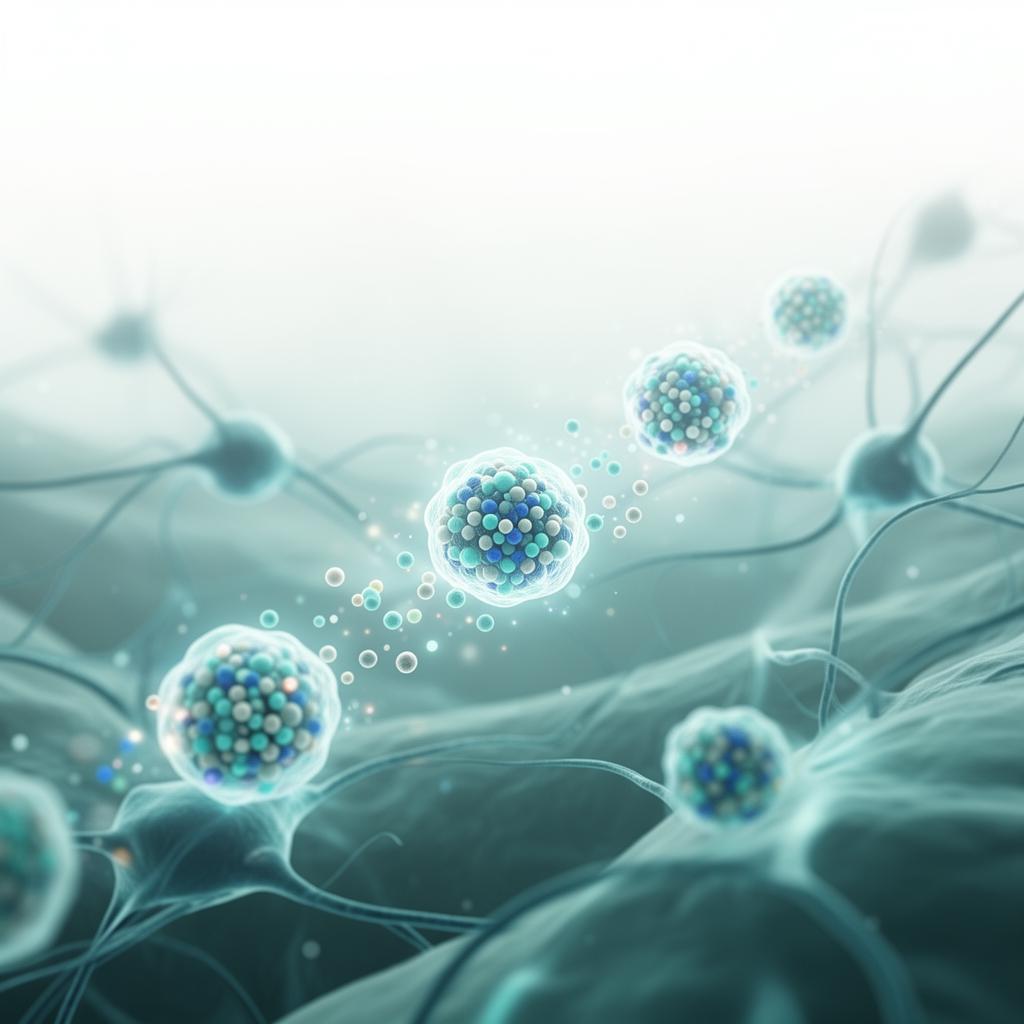
Exosome therapy represents the cutting edge of regenerative medicine. Exosomes are nano-sized extracellular vesicles (30-150 nanometers) naturally secreted by stem cells that carry a concentrated payload of proteins, lipids, mRNAs, and microRNAs. These signaling molecules can influence cell behavior, reduce inflammation, and promote tissue repair — delivering many of the therapeutic benefits of stem cells in a cell-free format. At Autism Stem Care, exosome therapy is an integral part of our advanced treatment protocols.
Therapy Type
Cell-free
Delivery Logic
Molecular signaling
Strategic Role
Standalone or combined
Positioning
Advanced cell-free regenerative therapy
Key Differentiator
Strong blood-brain barrier relevance
Family Interest
Rapid molecular signaling support
Protocol Logic
Powerful alone, stronger in combination

Learn how exosome signaling may complement your child's regenerative care plan.
Clinical Overview
Exosome therapy represents the cutting edge of regenerative medicine. Exosomes are nano-sized extracellular vesicles (30-150 nanometers) naturally secreted by stem cells that carry a concentrated payload of proteins, lipids, mRNAs, and microRNAs. These signaling molecules can influence cell behavior, reduce inflammation, and promote tissue repair — delivering many of the therapeutic benefits of stem cells in a cell-free format. At Autism Stem Care, exosome therapy is an integral part of our advanced treatment protocols.
Exosome therapy works alongside other regenerative approaches to provide families with a broader range of treatment options. When combined with MSC-based protocols, exosomes can enhance the overall therapeutic framework by delivering concentrated molecular signals that complement the sustained activity of stem cell therapy.
Exosome therapy is often considered alongside related treatment approaches, including umbilical cord mesenchymal stem cells, combined stem cell and exosome protocols, and intravenous stem cell therapy. Related conditions include autism and neuroinflammation, autism and immune dysregulation, and autism and gut inflammation.
Benefit Cards
Each benefit reflects a key property of exosome therapy that may be relevant to your child's treatment plan.
Exosomes deliver concentrated biological signals without the complexities of live cell administration, offering a streamlined therapeutic option.
Their nano-scale size allows exosomes to cross the blood-brain barrier more readily than whole cells, enabling more direct neurological support.
Exosomes carry potent anti-inflammatory microRNAs and proteins that can modulate neuroinflammation at the molecular level.
The molecular cargo within exosomes can help recalibrate immune responses, which is particularly relevant for children with immune dysregulation.
Exosomes can begin delivering their signaling payload immediately upon administration, supporting faster biological response.
When combined with stem cell therapy, exosomes add a concentrated signaling layer that enhances the overall regenerative framework.
As a cell-free approach, exosome therapy carries a favorable safety profile and is generally well-tolerated by pediatric patients.
Exosome preparations can be precisely characterized and standardized, supporting more consistent treatment protocols across patients.
Educational Content
Exosomes are tiny vesicles released by virtually all cell types, but those derived from mesenchymal stem cells are of particular therapeutic interest. MSC-derived exosomes carry the biological instructions that stem cells use to communicate with surrounding tissues. They can cross the blood-brain barrier more readily than whole cells, deliver anti-inflammatory and neuroprotective cargo directly to target cells, modulate immune responses at the molecular level, promote tissue repair and cellular regeneration, and support neural connectivity and synaptic function. Think of exosomes as the 'messages' that stem cells send — concentrated biological signals that can influence how cells behave, repair themselves, and communicate with one another.
Comparative Value
Exosome therapy and stem cell therapy are not competing approaches — they are complementary. While stem cells can engraft in tissues and continue to produce therapeutic factors over time, exosomes provide an immediate, concentrated delivery of signaling molecules. Many of our protocols combine both MSC therapy and exosome therapy to maximize therapeutic potential, leveraging the sustained effects of stem cells with the targeted, rapid action of exosomes.
Autism Relevance
For children with autism, exosome therapy offers several potential advantages: enhanced anti-neuroinflammatory effects through concentrated delivery of anti-inflammatory microRNAs, superior blood-brain barrier penetration for more direct CNS effects, immune modulation at the molecular level, support for gut-brain axis repair, promotion of neuroplasticity and synaptic remodeling, and rapid onset of biological activity.
Explore Your Options
Families exploring exosome therapy often want to understand how it fits alongside stem cell therapy, combination protocols, and different delivery routes. Explore our related treatment pages to build a complete picture of the available options.
Our coordination team is available to discuss how exosome therapy may fit within your child's treatment plan.
Why This Matters
For many families, the appeal of exosome therapy lies in its connection to the specific concerns they are researching: neurological inflammation, immune dysregulation, gut-brain dysfunction, and developmental support. Rather than an abstract laboratory concept, exosomes represent a targeted approach that may complement broader regenerative strategies.
Our clinical team evaluates each child's individual profile — including inflammatory markers, immune function, and developmental history — to determine whether exosome therapy may be an appropriate component of their personalized treatment protocol.
Related Treatments
Exosome therapy is part of a broader regenerative medicine framework. These related treatments may also be relevant to your child's care plan.
Related Treatment
Learn about the mesenchymal stem cell source from which therapeutic exosomes are derived, including quality standards and biological properties.
Learn more →Related Treatment
Explore how exosomes and MSCs can be combined in dual-modality treatment protocols for a more comprehensive regenerative approach.
Learn more →Related Treatment
Compare cell-free exosome therapy with systemic IV stem cell delivery to understand which approach may be most appropriate.
Learn more →Related Conditions
Exosome therapy may be particularly relevant for children with autism presentations involving these biological factors.
Related Condition
Learn why neuroinflammatory pathways in autism make exosome therapy a particularly relevant treatment option.
Learn more →Related Condition
Understand how immune dysregulation in autism may be addressed through the molecular signaling molecules delivered by exosomes.
Learn more →Related Condition
Learn about the connection between gut inflammation, brain function, and how exosome therapy may support gut-brain axis health.
Learn more →FAQ Section
Answers to the most commonly asked questions from families exploring exosome therapy for their child.
Both MSC therapy and exosome therapy have favorable safety profiles. Exosomes, being cell-free, do not carry risks associated with cell engraftment. However, both approaches are considered safe when administered under proper medical supervision with quality-assured products.
Yes, exosome therapy can be administered as a standalone treatment. However, many of our protocols combine exosomes with MSC therapy for a more comprehensive approach. The optimal strategy is determined during your child's personalized treatment planning.
Our exosomes are derived from mesenchymal stem cells cultured in GMP-aligned facilities. They are isolated, purified, characterized, and tested to ensure quality, potency, and safety before clinical use.
Exosomes are extracellular vesicles typically 30–150 nanometers in diameter. This nano-scale size is biologically meaningful: it allows them to circulate freely, interact with target cells, and in the case of intranasal delivery is the reason this route is reserved exclusively for exosomes and not for whole stem cells.
The two most commonly discussed routes are intravenous (IV) infusion for systemic signaling effects and intranasal administration for more direct exposure to neural tissue via the olfactory pathway. The chosen route depends on the clinical goals defined in the personalized treatment plan.
Responsible labs characterize each batch for particle size distribution, particle concentration, identity markers (CD9, CD63, CD81), sterility, mycoplasma, and endotoxin. Source cells and culture conditions are also documented. Parents are encouraged to ask for an explanation of this quality dossier during consultation.
No. Aesthetic and wellness 'exosome' products are not equivalent to medical-grade exosomes used inside a regulated regenerative medicine framework. Source, dose, characterization, sterility testing, and clinical oversight differ profoundly.
Exosomes are small enough that they are believed to interact with — and in some cases cross — the blood–brain barrier more readily than intact MSCs, particularly via intranasal delivery. This is one of the reasons they are of biological interest in conditions involving neuroinflammation and neural signaling.
No. Exosome therapy for autism is not approved as a standard treatment by agencies such as the FDA or EMA. It is offered as an investigational regenerative medicine option within a regulated Turkish medical framework, and outcomes are never guaranteed.
Protocols vary by case. Families often travel for a structured multi-day course that may include several exosome sessions, sometimes combined with MSC infusions, followed by a clinical review at 3 and 6 months. We do not sell standardized packages detached from clinical reasoning.
Reported observations vary widely and are never guaranteed. Families most commonly describe gradual changes in sleep quality, gut comfort, attention, sensory tolerance, and engagement during therapies. Some children show no significant change. Honest expectation framing is part of every consultation.
Yes. Combined MSC + exosome protocols are among the most commonly discussed approaches in autism-focused regenerative medicine. The rationale is that MSCs provide sustained living-cell signaling while exosomes deliver concentrated, ready-to-act vesicle cargo. Whether to combine them is decided individually.
Take the Next Step
Our medical coordination team can discuss your child's unique case, explain the role of exosome therapy within a broader treatment plan, and help you understand whether this approach may be appropriate for their specific needs.

Free medical review
Personalized guidance for your child