✦
Systemic Anti-Inflammatory Support
IV administration enables MSCs to circulate throughout the body, supporting children whose symptom picture involves systemic inflammation across multiple organ systems.
Systemic delivery of mesenchymal stem cells for comprehensive regenerative support
Intravenous (IV) administration is one of the primary routes for delivering mesenchymal stem cells in our autism treatment protocols. By introducing MSCs directly into the bloodstream, we enable systemic distribution of cells throughout the body, allowing them to migrate to areas of inflammation and tissue damage where their therapeutic effects are most needed.
Delivery Route
Intravenous infusion
Treatment Style
Systemic whole-body support
Parent Interest
Familiar infusion pathway

Autism Stem Care
IV administration is one of the most important delivery routes in our treatment protocols. Here's what families need to know about how it works and why it matters.
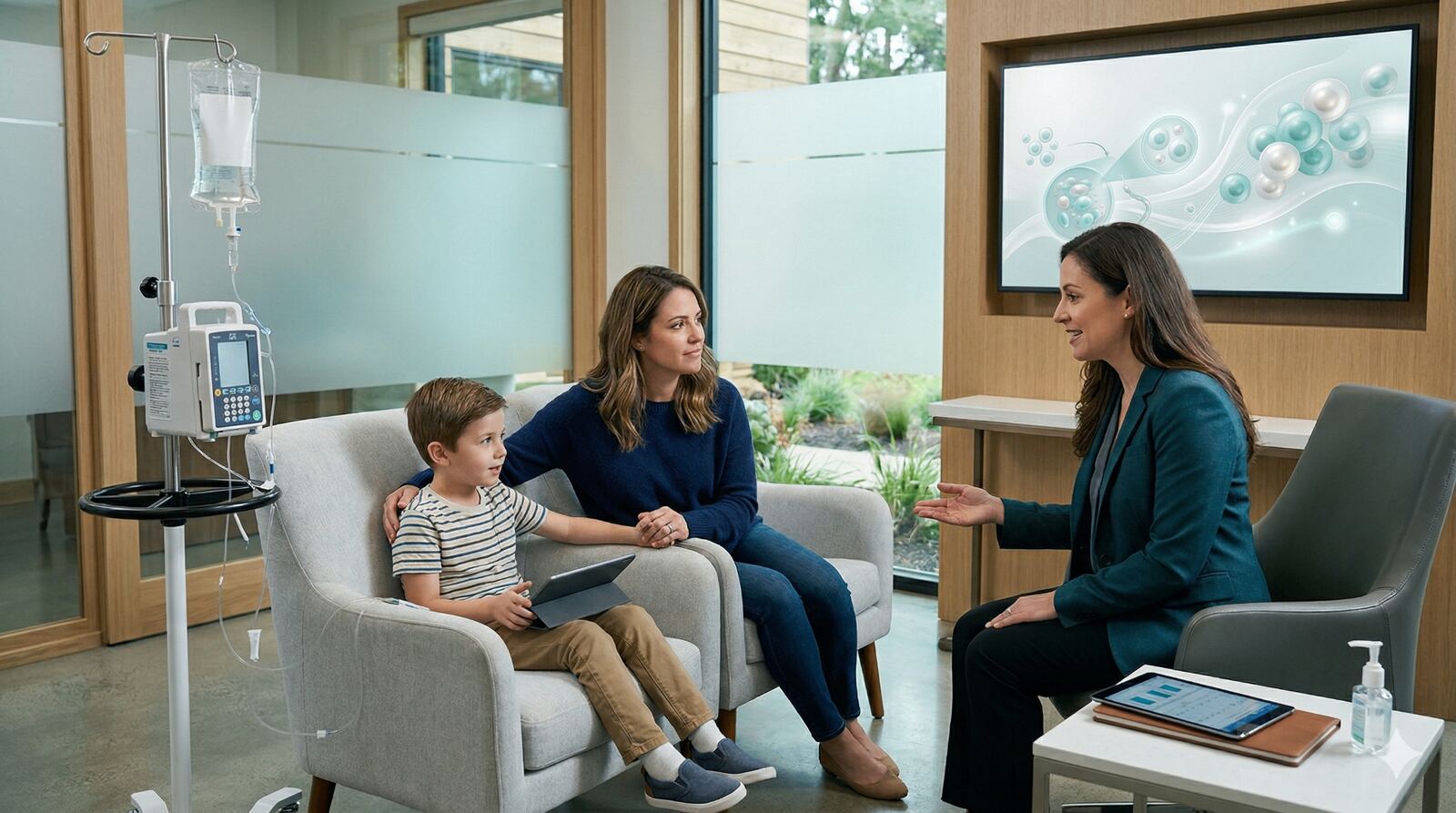
Our team can explain how intravenous delivery fits within a broader treatment approach for your child.
Clinical Overview
Intravenous (IV) administration is one of the primary routes for delivering mesenchymal stem cells in our autism treatment protocols. By introducing MSCs directly into the bloodstream, we enable systemic distribution of cells throughout the body, allowing them to migrate to areas of inflammation and tissue damage where their therapeutic effects are most needed.
Intravenous administration allows stem cells to enter the bloodstream and circulate throughout the body, reaching multiple organ systems simultaneously. This systemic distribution may be particularly relevant when a child's clinical picture includes immune dysregulation, gut dysfunction, inflammatory burden, or multi-system stress.
IV stem cell therapy is often considered alongside other treatment modalities, including intrathecal stem cell administration, intranasal exosome therapy, umbilical cord mesenchymal stem cells, and supportive IV therapies. Related conditions include autism and immune dysregulation and autism and gut inflammation.
Autism Stem Care
IV stem cell therapy offers distinct advantages for children whose autism presentation involves multiple biological systems.
IV administration enables MSCs to circulate throughout the body, supporting children whose symptom picture involves systemic inflammation across multiple organ systems.
The IV procedure is similar to a standard intravenous drip — no surgery is involved. This familiar format makes the experience more comfortable and less intimidating for families.
Once introduced into the bloodstream, MSCs can migrate to areas of inflammation and tissue damage throughout the body, reaching multiple organ systems simultaneously.
For children with autism who experience immune dysregulation, gastrointestinal issues, and systemic inflammation, whole-body distribution allows therapeutic cells to address multiple biological concerns concurrently.
IV stem cell infusion is generally well-tolerated by pediatric patients. Clear procedural expectations and continuous monitoring help families feel comfortable throughout the treatment session.
IV administration is frequently combined with intrathecal delivery for a dual-route approach that addresses both systemic and central nervous system targets within a single treatment protocol.
Educational Content
IV stem cell therapy involves the slow intravenous infusion of a carefully prepared solution containing a precise number of mesenchymal stem cells (MSCs). This IV stem cell infusion is administered through a peripheral vein, similar to a standard medical drip, and typically takes around 30 to 60 minutes. For many families, intravenous stem cell therapy is one of the most familiar and approachable parts of a broader treatment protocol because the session is gentle, structured, and easy to understand. Once the MSCs enter the bloodstream, they are distributed systemically throughout the body. This means the cells are not limited to one local area, but can help support multiple systems affected by inflammation, immune imbalance, and impaired cellular communication. In autism-focused regenerative medicine protocols, IV stem cell therapy is often included to help modulate immune responses, reduce systemic inflammation, support gut barrier health, and release important paracrine signaling factors that encourage repair and regulation across the body.
This systemic reach is one of the main reasons IV MSC therapy is frequently used as part of a broader regenerative strategy. While some administration routes are designed for more targeted delivery, intravenous administration is valued for its whole-body distribution. This can be especially relevant for children with autism who may also present with gastrointestinal dysfunction, inflammatory burden, immune dysregulation, or metabolic imbalance. By supporting these broader biological systems, IV stem cell infusion can play an important role within a more comprehensive treatment approach.
For parents, it is often reassuring to understand exactly what happens during the treatment session. The infusion is performed in a controlled clinical setting and is designed to be as smooth and comfortable as possible. Because the treatment resembles a standard IV drip, it is often easier for families to understand than more specialized routes of administration. This clarity helps parents feel more informed about how the therapy is delivered and why intravenous administration is often included in broader autism treatment protocols.
Systemic Value
IV administration allows MSCs to reach multiple organ systems simultaneously, making it particularly valuable for children with autism who may have systemic inflammation, immune dysregulation, gut dysfunction, and other widespread biological challenges. The systemic approach ensures that therapeutic effects are not limited to a single organ or tissue.
IV delivery is not confined to one tissue or organ system. Once in the bloodstream, stem cells may reach sites of inflammation, immune activation, and tissue stress throughout the body — making this route particularly relevant for children with multi-system involvement.
When a child presents with immune dysregulation, gut dysfunction, and widespread inflammatory stress, systemic IV delivery may offer broader coverage than localized routes alone, potentially supporting the body's natural regulatory processes across multiple pathways.
IV stem cell therapy is often considered alongside intrathecal delivery, exosome therapy, or supportive IV nutrients as part of a multi-modality protocol — allowing the medical team to address both systemic and localized needs within a single treatment plan.

Request a personalized review of your child's case to understand how IV therapy could fit within a broader protocol.
Parent Education
Parents comparing treatment routes often start with practical questions: how invasive is the procedure, how long does the session last, what level of discomfort is expected, and why IV administration is included in a protocol at all. Below, we address these common concerns so families can make more informed decisions about their child's care.
Families may also find it helpful to explore related condition pages such as autism and immune dysregulation and autism and gut inflammation to understand the broader biological context behind systemic treatment approaches.
Typical infusion window
A typical IV stem cell infusion takes approximately 30 to 60 minutes.
Familiar administration method
Intravenous infusion follows a well-known medical format similar to standard IV drips, making the experience easier to understand and more comfortable for families.
Compare Options
Families researching intravenous stem cell therapy often want to understand how it compares with other delivery routes such as intrathecal administration, exosome-based options, and the specific stem cell sources used in treatment.
Autism Stem Care
IV stem cell therapy works alongside other delivery routes and treatment modalities as part of a comprehensive approach.
Related Treatment
Compare systemic IV delivery with direct cerebrospinal fluid administration for targeted neurological support.
Learn more →Related Treatment
Learn about non-invasive exosome delivery through the nasal pathway as an alternative or complement to IV therapy.
Learn more →Related Treatment
Explore the mesenchymal stem cell source used in our IV treatment protocols, including quality standards and sourcing.
Learn more →Related Treatment
Learn how nutritional and antioxidant IV infusions may complement stem cell therapy to optimize treatment outcomes.
Learn more →Autism Stem Care
IV stem cell therapy may be particularly relevant for children with these autism-related biological presentations.
Related Condition
Understand how immune dysregulation in autism may benefit from the systemic anti-inflammatory effects of IV MSC therapy.
Learn more →Related Condition
Learn about the connection between gut inflammation and autism, and how systemic MSC delivery may support gut health.
Learn more →Autism Stem Care
Answers to the most frequently asked questions from families exploring IV stem cell therapy.
The primary discomfort is the initial IV insertion, which is similar to a blood draw. Our pediatric team uses topical numbing agents when appropriate and minimizes handling to keep the child as comfortable as possible.
A typical IV stem cell infusion takes approximately 30 to 60 minutes, depending on dose and the child's tolerance. Children are continuously monitored throughout the procedure and during a short observation window afterward.
IV administration distributes MSCs systemically, where they are believed to interact with circulating immune cells and inflammatory signaling. This makes it a clinically appropriate choice when the goals emphasize systemic immunomodulation, anti-inflammatory effects, and broad paracrine signaling.
IV delivery is systemic and well-tolerated, while intrathecal delivery offers more direct exposure to the central nervous system. They are not competitive — many personalized plans combine the two, with the balance decided based on each child's clinical goals.
MSCs used in IV protocols are typically derived from umbilical cord tissue, specifically Wharton's Jelly, from donated tissue after healthy full-term deliveries. Donors are comprehensively screened and the cells are processed in GMP-aligned facilities.
Every batch is verified for viability, identity markers (CD73⁺, CD90⁺, CD105⁺ / CD34⁻, CD45⁻), sterility, mycoplasma, and endotoxin before release. Parents are welcome to request an explanation of the quality dossier during consultation.
IV MSC therapy has a favorable safety profile in published research. As with any medical procedure, safety always depends on the child's medical history, current medications, and a careful eligibility review. A thorough medical assessment is mandatory before any IV protocol is recommended.
Most personalized plans include several IV infusions over a structured treatment week, often combined with adjunctive supportive therapies. The exact number is determined after the medical review and never sold as a standalone fixed package.
Families arrive at the clinic, the child is welcomed and prepared with the medical team, the IV line is placed, the infusion is administered over 30–60 minutes with continuous monitoring, and the child is then observed for a short recovery period before being discharged for the day.
Yes. Combined MSC + exosome protocols are commonly discussed in autism-focused regenerative medicine. The MSCs provide sustained living-cell signaling while exosomes deliver concentrated extracellular vesicle cargo. Combinations are always personalized to the child's clinical profile.
No. MSC-based IV therapy for autism is not approved as a standard treatment by agencies such as the FDA or EMA. It is offered as an investigational regenerative medicine option within a regulated Turkish medical framework, with honest expectation framing and full clinical oversight.
Families receive a written summary of the protocol, agreed observational markers, and scheduled follow-up reviews — typically at 3 and 6 months — to assess any changes in sleep, gut comfort, attention, sensory tolerance, and engagement, and to decide on any next steps.
Take the Next Step
Our medical coordination team can discuss your child's unique case, explain the role of IV delivery within a broader treatment plan, and help you understand whether this approach may be appropriate for their specific needs. Free, no-obligation consultation.

Free medical review
Personalized guidance for your child