✦
Direct Central Nervous System Access
Intrathecal delivery places mesenchymal stem cells directly into the cerebrospinal fluid, providing a more direct route to neurological tissues compared to systemic administration.
Direct CNS access
Delivering stem cells directly to the central nervous system for targeted neurological support
Intrathecal administration involves the delivery of mesenchymal stem cells directly into the cerebrospinal fluid (CSF) through a lumbar puncture procedure. This route bypasses the blood-brain barrier, allowing MSCs to access the central nervous system more directly and potentially exert stronger effects on neuroinflammation, neural repair and brain function.
Delivery Route
Cerebrospinal fluid access
Clinical Focus
CNS-targeted support
Procedure Style
Lumbar puncture based

Autism Stem Care
Intrathecal administration delivers mesenchymal stem cells directly into the cerebrospinal fluid, offering a targeted approach to neurological support for children with autism.
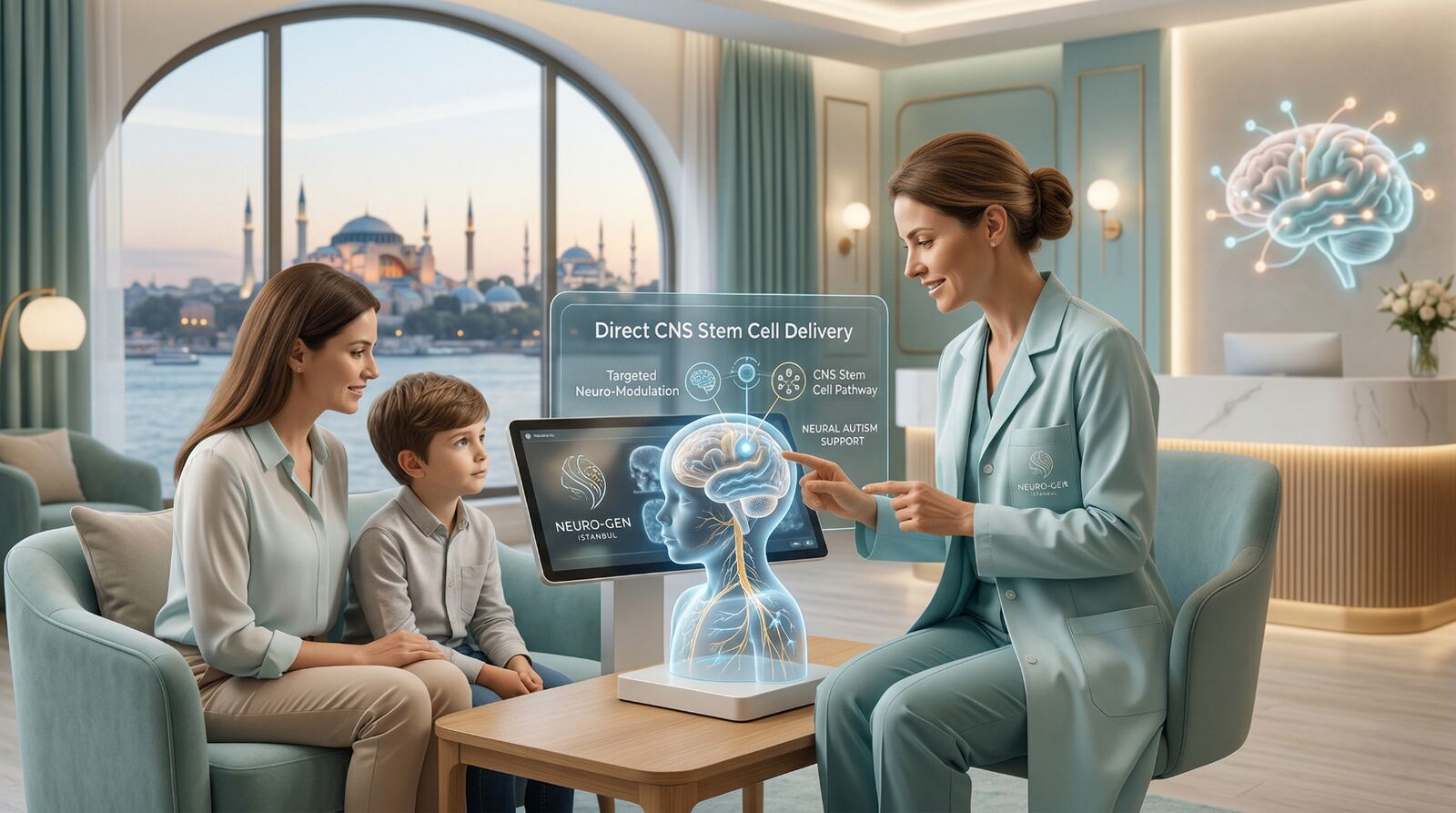
Our medical team can discuss whether direct CNS delivery may be suitable for your child's clinical profile.
Clinical Overview
Intrathecal administration involves the delivery of mesenchymal stem cells directly into the cerebrospinal fluid (CSF) through a lumbar puncture procedure. This route bypasses the blood-brain barrier, allowing MSCs to access the central nervous system more directly and potentially exert stronger effects on neuroinflammation, neural repair and brain function.
Understanding why direct CSF delivery is discussed helps families evaluate this option alongside other administration routes. The ability to bypass the blood-brain barrier is a central consideration for neurological support in children with autism.
Intrathecal administration is often considered alongside other treatment approaches, including intravenous stem cell therapy, intranasal exosome therapy, umbilical cord mesenchymal stem cellsand combined stem cell and exosome protocols. Related conditions that may be relevant include autism and neuroinflammation, autism and speech delayand autism and developmental delay.
Evidence-Based Approach
Our treatment protocols are grounded in published research on intrathecal MSC delivery and clinical experience with pediatric patients.
Comprehensive Patient Education
We provide detailed procedure information, clear safety expectations and guidance to help families make informed treatment decisions.
Autism Stem Care
Key advantages of direct cerebrospinal fluid delivery for children with autism.
Intrathecal delivery places mesenchymal stem cells directly into the cerebrospinal fluid, providing a more direct route to neurological tissues compared to systemic administration.
Direct CNS access
The blood-brain barrier limits the passage of many therapeutic agents into the central nervous system. Intrathecal administration bypasses this barrier entirely, allowing MSCs to access neural tissue directly.
Bypasses the blood-brain barrier
By delivering cells directly into the CSF, intrathecal administration achieves higher local concentrations of MSCs in the central nervous system than systemically distributed approaches.
Higher local concentration in the CNS
Intrathecal MSC delivery is particularly relevant for children whose autism presentation involves chronic neuroinflammation, speech and language delays, or motor coordination challenges.
Targeted neuroinflammation support
MSCs delivered intrathecally release neurotrophic factors, growth factors and anti-inflammatory molecules directly within the CNS environment, potentially supporting neural repair and reducing inflammation.
Enhanced delivery of neurotrophic factors
Lumbar puncture is a well-established procedure used routinely in pediatric medicine. Parents can feel reassured by its long track record of safety when performed by experienced physicians.
Well-established medical procedure
Neurological Rationale
For children with autism, neuroinflammation and central nervous system dysfunction are key biological targets. While IV administration provides systemic benefits, intrathecal delivery offers direct CNS access, bypassing the blood-brain barrier completely; higher local concentrations of cells in the cerebrospinal fluid; more targeted effects on brain and spinal cord inflammation; enhanced delivery of neuroprotective paracrine factors to neural tissue; and potentially stronger effects on neurological symptoms. This makes intrathecal administration particularly relevant for children whose autism presentation includes significant neuroinflammation, speech delays, cognitive challenges and motor coordination difficulties.
Families exploring intrathecal delivery often want to understand specifically how this route differs from systemic IV administration and why direct CNS access may be relevant for their child's neuroinflammatory, speech, cognitive, or motor coordination challenges.
Understanding the distinct rationale for intrathecal delivery helps families make informed comparisons with other routes, including IV administration and combination protocol pages.
Procedure Overview
Intrathecal administration is performed by experienced physicians under sterile conditions. The procedure involves a lumbar puncture (similar to a spinal tap) through which a precisely measured dose of MSCs is injected into the CSF. The procedure takes approximately 15 to 30 minutes and is performed under appropriate sedation or anesthesia for pediatric patients to ensure comfort and safety.
All intrathecal procedures are performed by experienced physicians in fully sterile clinical settings, following strict safety protocols to protect your child.
The intrathecal procedure typically takes approximately 15 to 30 minutes to complete, depending on the child and clinical circumstances.
Appropriate sedation or anesthesia is provided for pediatric patients to ensure comfort and safety throughout the procedure.

Every child's clinical profile is different. Our team can help you understand whether this treatment approach may be appropriate.
Parent Education
Parents comparing intrathecal treatment routes usually begin with practical and neurological questions at the same time: what exactly is being done, why this route is considered more direct, whether the procedure is painful, how comfort is managed for children and how it compares with IV administration.
We address these questions directly so families feel fully informed. Parents may also find it helpful to review related condition pages such as neuroinflammation, speech delayand developmental delay to understand the broader biological context behind CNS-directed treatment approaches.
Typical procedure window
Intrathecal administration typically takes approximately 15 to 30 minutes.
Comfort-focused pediatric care
The procedure is performed under appropriate sedation or anesthesia for pediatric patients to ensure comfort.
Compare Treatment Routes
Families researching intrathecal stem cell administration often want to compare it with IV delivery, exosome-focused options, and combined protocols. Understanding the differences between delivery routes can help inform your consultation with our medical team.
Autism Stem Care
Explore complementary treatment modalities that may be combined with intrathecal administration for a comprehensive regenerative protocol.
Related Treatment
Compare direct cerebrospinal fluid delivery with systemic IV stem cell infusion to understand which route may be most appropriate for your child.
Learn more →Related Treatment
Learn about non-invasive exosome delivery through the nasal pathway as an alternative or complement to intrathecal administration.
Learn more →Related Treatment
Explore the mesenchymal stem cell source used in our intrathecal treatment protocols and learn about cell quality, sourcing, and characterization.
Learn more →Related Treatment
Learn how intrathecal stem cell delivery may be combined with exosome therapy and other modalities for a comprehensive treatment approach.
Learn more →Autism Stem Care
Learn more about the neurological and developmental conditions that may be addressed through intrathecal stem cell administration.
Related Condition
Understand how chronic neuroinflammation in the brain relates to autism symptoms and why CNS-directed therapies are being explored.
Learn more →Related Condition
Learn about the connection between autism and speech delay, including how neurological support may be relevant.
Learn more →Related Condition
Explore how developmental delays in autism relate to central nervous system function and targeted treatment approaches.
Learn more →Autism Stem Care
Common questions from families considering intrathecal stem cell administration for their child.
Lumbar puncture is a well-established medical procedure performed routinely in pediatric medicine. When carried out by experienced physicians, it carries a low risk of complications. Every child undergoes a thorough medical evaluation before being considered a suitable candidate.
The procedure is performed under appropriate sedation or anesthesia for pediatric patients to ensure comfort. Post-procedure, some children may experience a mild headache that typically resolves within 24–48 hours with rest and hydration.
Intrathecal administration delivers cells directly into the cerebrospinal fluid, providing more direct exposure to the central nervous system. It is considered when the clinical goals emphasize CNS-related targets such as neuroinflammation, neural signaling, or developmental concerns where systemic IV delivery alone may be less direct.
Candidacy depends on the child's neurological history, imaging when relevant, coagulation status, current medications, seizure history, and overall medical eligibility. Not every child is a suitable candidate, and a clinical review is mandatory before this route is recommended.
The child is positioned and given appropriate pediatric sedation. Using sterile technique, a thin spinal needle is introduced into the lumbar subarachnoid space, a small volume of CSF is sampled if needed, and the prepared cell product is slowly infused. The child is then monitored in a recovery area.
The intrathecal procedure itself is typically completed within 20–30 minutes. Including sedation preparation and post-procedure monitoring, families should plan for a half-day clinical visit on the day of administration.
Children are typically advised to lie flat and rest for several hours after the procedure, with gentle activity and good hydration over the following 24–48 hours. Strenuous activity is avoided briefly. Detailed aftercare instructions are provided in writing before discharge.
Yes. Many personalized protocols combine intrathecal administration for CNS-focused exposure with IV infusions for systemic immunomodulation, and sometimes intranasal exosomes for direct neural signaling. Combinations are always decided as part of the individualized treatment plan.
Cells are processed in GMP-aligned facilities and prepared in a sterile, preservative-free vehicle suitable for intrathecal use. Each batch is verified for sterility, endotoxin, viability, and identity before being released for clinical administration.
Published clinical data on intrathecal MSC administration generally describe a favorable short-term safety profile when performed under appropriate medical oversight. Long-term data continues to be collected as a part of ongoing research. Honest discussion of what is and is not known is part of every consultation.
No. Intrathecal MSC therapy for autism is not approved as a standard treatment by agencies such as the FDA or EMA. It is offered as an investigational regenerative medicine option within a regulated Turkish medical framework, and outcomes are never guaranteed.
Most personalized plans involve a small number of intrathecal sessions over a structured treatment course, rather than repeated frequent procedures. The specific number is decided based on clinical reasoning and the child's response, not on a fixed package.
Get Started
Intrathecal stem cell administration represents one of the most targeted approaches available in regenerative medicine for neurological support. Our medical team is ready to discuss whether this treatment modality may be appropriate for your child's unique clinical profile. Every consultation is free, confidential, and without obligation.

Free medical review
Personalized guidance for your child