Cell-to-Cell Signaling
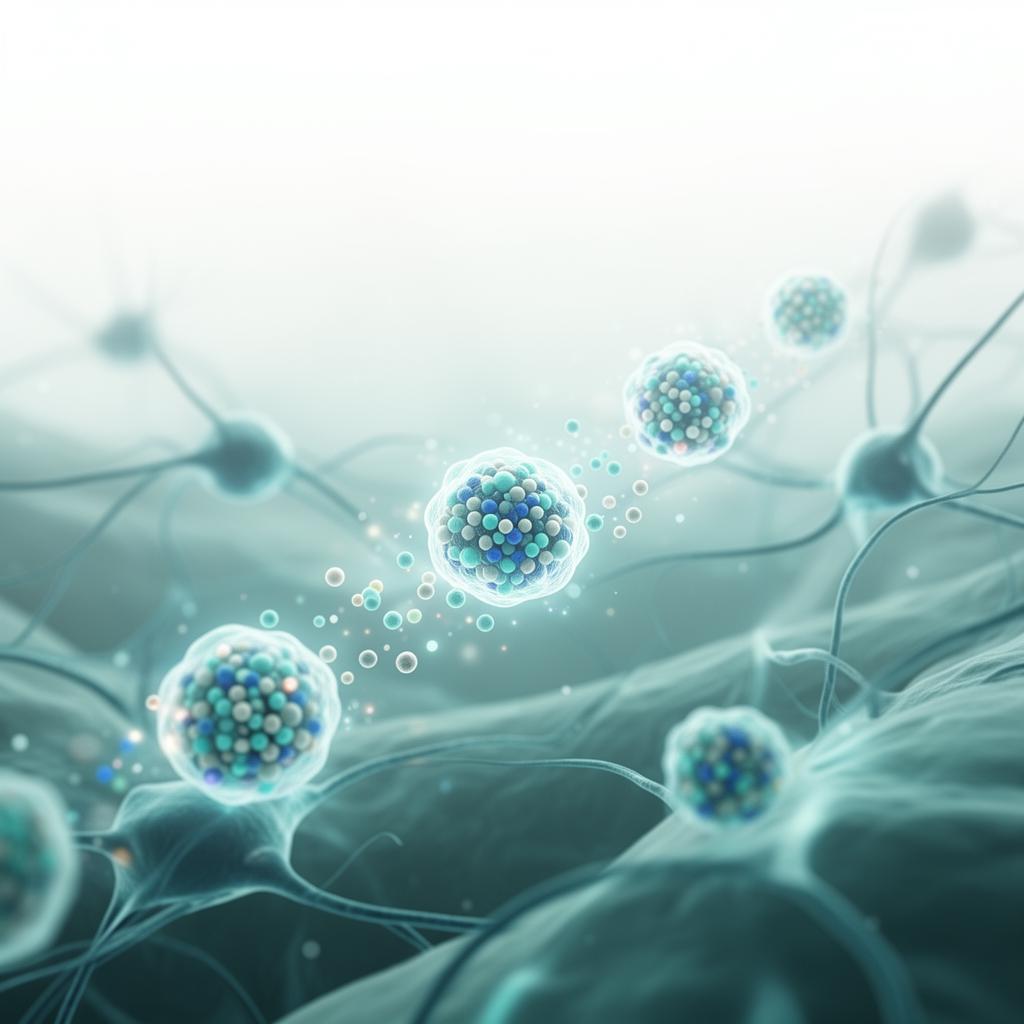
Exosomes carry mRNAs, microRNAs, and proteins that facilitate communication between cells, helping coordinate biological responses across tissues and organ systems.
Advanced cell-free regenerative medicine using concentrated signaling molecules from mesenchymal stem cells — designed to support children with autism spectrum disorder through personalized treatment protocols at Autism Stem Care.
Understanding Exosome Therapy
Exosome therapy is a cell-free regenerative medicine approach that utilizes nano-sized extracellular vesicles — known as exosomes — derived from mesenchymal stem cells. These vesicles, measuring just 30 to 150 nanometers in diameter, carry a concentrated payload of proteins, lipids, messenger RNAs, and microRNAs that play a central role in cell-to-cell communication throughout the body.
In the context of autism spectrum disorder, exosome therapy is explored because many children on the spectrum present with biological challenges that exosomes may be uniquely positioned to address. These challenges include chronic neuroinflammation, immune dysregulation, oxidative stress, gut-brain axis dysfunction, and altered cell signaling — all areas where the molecular cargo within exosomes may offer targeted biological support.
At Autism Stem Care in Istanbul, Turkey, exosome therapy is administered as part of carefully designed, individualized treatment protocols. Our approach is science-informed, medically responsible, and focused on supporting the biological environment rather than making curative claims. Every treatment plan is tailored to the child's unique clinical profile following a comprehensive evaluation by our medical team.
Clinical Definition
Exosome therapy for autism involves the administration of purified, concentrated extracellular vesicles derived from Wharton's Jelly mesenchymal stem cells. Unlike traditional stem cell therapy, which introduces living cells into the body, exosome therapy delivers the biological messages that stem cells produce — without the cells themselves. This cell-free approach offers a distinct therapeutic profile that may complement or serve as an alternative to cell-based treatments.
The therapeutic concept rests on the understanding that many of the benefits attributed to stem cell therapy are driven by paracrine signaling — the release of bioactive molecules that influence surrounding tissues. Exosomes are a primary vehicle for this signaling, carrying a rich molecular cargo that can modulate immune responses, reduce inflammatory activity, and support cellular repair processes.
Families explore exosome therapy abroad — and specifically in Istanbul — because it represents an advanced treatment approach that may not be widely available in their home countries. Turkey's medical infrastructure, combined with Autism Stem Care's specialized focus on autism and regenerative medicine, offers international families access to protocols that integrate the latest developments in cell-free regenerative science.

Our team can help you understand whether this approach may be appropriate based on your child's clinical profile.
Mechanisms of Action
Exosomes exert their effects through multiple complementary pathways. Understanding these mechanisms helps families appreciate why exosome therapy is explored as part of regenerative medicine for autism.
Exosomes carry mRNAs, microRNAs, and proteins that facilitate communication between cells, helping coordinate biological responses across tissues and organ systems.
MSC-derived exosomes deliver concentrated anti-inflammatory microRNAs and cytokines that may help modulate chronic inflammatory activity, including neuroinflammation associated with autism.
Exosomes can influence immune cell behavior at the molecular level, helping to recalibrate immune responses that may be dysregulated in children with autism spectrum disorder.
The molecular cargo within exosomes includes neurotrophic and growth factors that may support cellular repair processes, neural connectivity, and tissue maintenance.
Exosomes promote regenerative signaling pathways that aim to support tissue integrity — including gut barrier function and neural tissue — through targeted molecular delivery.
At 30–150 nanometers, exosomes are small enough to cross the blood-brain barrier more readily than whole cells, enabling more direct delivery of therapeutic signals to the central nervous system.
Autism-Specific Relevance
The interest in exosome therapy for autism stems from a growing body of research identifying specific biological factors that may contribute to autism-related symptoms. Rather than targeting behaviors directly, exosome therapy aims to support the biological environment in which those behaviors arise.
Chronic activation of the brain's immune cells — known as microglia — has been identified in many individuals with autism. This sustained neuroinflammatory state may impair neural development, disrupt synaptic function, and contribute to behavioral and cognitive challenges. Exosomes carry potent anti-inflammatory microRNAs and proteins that are designed to modulate these inflammatory pathways at the molecular level.
Many children with autism show signs of immune dysregulation, including elevated pro-inflammatory cytokines, abnormal natural killer cell activity, and altered T-cell responses. The immunomodulatory cargo within exosomes may help recalibrate these immune responses toward a more balanced state.
The bidirectional communication between the gastrointestinal system and the brain is increasingly recognized as a factor in autism. Many children with ASD experience digestive issues, food sensitivities, and intestinal inflammation. Exosomes may support gut barrier integrity and influence the inflammatory environment within the gastrointestinal tract, contributing to improved gut-brain communication.
Oxidative stress and mitochondrial dysfunction are commonly discussed in autism research. The trophic factors carried by exosomes may support cellular repair processes and contribute to more stable cellular energy production — areas where many children with autism show measurable challenges.
Exosomes may promote neuroplasticity and support the formation of healthier neural connections by delivering neurotrophic factors directly to the central nervous system. This is particularly relevant for children with speech delay, developmental delay, and social communication difficulties.
Administration Routes
The route of exosome administration is selected based on the child's clinical profile, treatment goals, and the specific biological targets identified during evaluation.
IV administration delivers exosomes directly into the bloodstream for systemic distribution. This route is designed to reach multiple organ systems simultaneously, making it particularly relevant for children with widespread inflammatory activity, immune dysregulation, or gastrointestinal concerns. The procedure is similar to a standard IV drip and is well-tolerated by pediatric patients.
Learn about IV administration →Intranasal delivery leverages the olfactory and trigeminal nerve pathways to bypass the blood-brain barrier, providing a non-invasive "nose-to-brain" route. Because exosomes are nano-sized (30–150 nm), they are ideally suited for this pathway. This route may be selected when more direct central nervous system support is a priority.
Explore intranasal exosome therapy →Many treatment protocols at Autism Stem Care combine exosome therapy with mesenchymal stem cell therapy in a dual-modality approach. This layered strategy leverages the sustained biological activity of MSCs with the rapid, concentrated signaling of exosomes for a more comprehensive regenerative framework.
View combined protocols →Our medical coordination team can help you understand whether exosome therapy may be appropriate for your child. Request a free consultation to discuss your child's specific needs.
Our coordination team can discuss how exosome therapy may fit within your child's treatment plan.
Patient Selection
Exosome therapy is not a one-size-fits-all intervention. At Autism Stem Care, every child is evaluated individually, and treatment recommendations are based on a thorough assessment of the child's biological profile, developmental history, and clinical needs.
Families who typically explore exosome therapy include:
The decision to pursue exosome therapy should be made collaboratively between the family and our medical team, based on a clear understanding of the child's needs, realistic expectations, and a personalized treatment plan.
Our Istanbul Approach
Located in Istanbul, Turkey, Autism Stem Care combines specialized autism expertise with comprehensive international patient support.
Istanbul offers world-class medical infrastructure, direct flights from major cities worldwide, and a family-friendly environment that makes medical travel practical and comfortable for international families.
Our clinic is designed specifically for families traveling from abroad. We provide multilingual coordination, airport transfers, accommodation guidance, and structured support throughout every stage of the treatment journey.
No two children are the same. Every protocol is individually designed based on comprehensive evaluation, ensuring that treatment addresses your child's specific biological targets and clinical needs.
Exosome therapy exists within a broader framework that includes stem cell therapy, intrathecal and IV administration, intranasal delivery, supportive IV therapies, and structured follow-up monitoring.
From visa guidance to hotel recommendations, our international coordination team manages the logistical details so families can focus on their child's care rather than travel arrangements.
All exosome preparations are sourced from GMP-certified facilities and undergo rigorous testing for sterility, potency, and safety before clinical use. Full documentation is available for review.
Learn more about why families choose Istanbul for regenerative medicine, or explore our international patient services and country-specific travel guides.
Your Treatment Journey
From initial inquiry to follow-up care, every step is designed to be clear, structured, and supportive for international families.
Step 1
Families reach out through our consultation form or WhatsApp. Our coordination team responds promptly to discuss your child's situation and provide initial guidance.
Step 2
Our medical team conducts a comprehensive review of your child's history, developmental assessments, laboratory results, and prior treatments to establish a clinical baseline.
Step 3
Based on the review, our team proposes a tailored treatment plan including specific modalities, administration routes, and protocol duration designed for your child's needs.
Step 4
Our international coordination team assists with visa guidance, flight recommendations, accommodation options, and airport transfer arrangements to ensure a smooth arrival.
Step 5
Upon arrival in Istanbul, your child undergoes a thorough in-person medical evaluation to confirm the treatment plan and make any necessary adjustments.
Step 6
Treatment is delivered according to the personalized protocol — which may include IV exosome therapy, intranasal delivery, MSC therapy, and supportive interventions over multiple sessions.
Step 7
Before departure, families receive detailed aftercare instructions, monitoring schedules, and access to our team for ongoing questions and structured follow-up consultations.
Learn more about the full patient journey, how to prepare for your visit, or how consultations work.
Start Your JourneyTreatment Goals
These represent areas where exosome therapy is designed to provide biological support — framed as treatment goals, not guarantees.
Supporting the modulation of chronic inflammatory activity, including neuroinflammation, through the delivery of anti-inflammatory microRNAs and cytokines.
Facilitating healthier cell-to-cell communication by delivering concentrated molecular signals that may influence how cells behave, repair, and coordinate.
Aiming to support broader physiological balance across immune, gastrointestinal, and neurological systems through systemic exosome delivery.
Complementing stem cell therapy and other regenerative approaches by adding a concentrated signaling layer that enhances the overall treatment framework.
Tailoring exosome therapy to each child's unique biological profile, ensuring treatment addresses their specific clinical needs and developmental goals.
Supporting a healthier neurological environment through targeted delivery of neurotrophic factors and anti-inflammatory signals to the central nervous system.
Safety & Expectations
Transparency and honest communication are fundamental to our approach at Autism Stem Care. We believe that trust is built through clarity about both the potential and the limitations of any treatment.
Responses vary individually. Regenerative medicine, including exosome therapy, produces different responses in different children. There are no guaranteed outcomes, and treatment timelines differ based on the child's unique biology, the severity of their condition, and the specific protocol administered.
This is not a cure. Exosome therapy is designed to support biological regulation and create better conditions for development and function. It is not presented as a cure for autism spectrum disorder, and no responsible provider should make such claims.
Medical eligibility requires review. Not every child is an appropriate candidate for exosome therapy. Our medical team conducts thorough evaluations to determine suitability, and we will communicate honestly if we believe a different approach may be more appropriate.
Safety profile. As a cell-free approach, exosome therapy carries a favorable safety profile. All products are sourced from GMP-certified facilities and undergo rigorous testing. However, families should discuss any concerns with our medical team during the consultation process.
For more information, review our safety and eligibility criteria or read our medical disclaimer.
Treatment Comparison
Understanding how different treatment modalities relate to each other helps families make informed decisions about their child's care plan.
| Exosome Therapy | UC-MSC Therapy | Combined Protocols | |
|---|---|---|---|
| Biologic Nature | Cell-free extracellular vesicles (30–150 nm) | Living mesenchymal stem cells | Both living cells and cell-free vesicles |
| Therapeutic Rationale | Concentrated molecular signaling for rapid, targeted effects | Sustained paracrine activity with potential tissue engraftment | Layered approach combining immediate signaling with sustained cellular activity |
| BBB Penetration | Superior due to nano-scale size | Can cross with some limitations | Enhanced through dual-modality delivery |
| Role in Planning | Standalone or complementary component | Core regenerative foundation | Comprehensive multi-layered protocol |
Plan Your Visit
Our medical coordination team is available to discuss your child's unique case, review medical records, and help you understand whether exosome therapy may be an appropriate component of their treatment plan.

Frequently Asked Questions
Comprehensive answers to the questions families most frequently ask when exploring exosome therapy for their child.
Exosome therapy is a cell-free regenerative medicine approach that uses nano-sized extracellular vesicles derived from mesenchymal stem cells. These vesicles carry concentrated biological signals — including proteins, lipids, and microRNAs — that may help modulate inflammation, support immune balance, and promote cellular communication. At Autism Stem Care in Istanbul, exosome therapy is used as part of individualized treatment protocols designed for children with autism spectrum disorder.
While stem cells are living cells that can engraft in tissues and continue producing therapeutic factors over time, exosomes are the signaling molecules that stem cells release. Exosomes are cell-free, meaning they deliver concentrated biological instructions without introducing live cells. Both approaches have complementary roles, and many protocols at Autism Stem Care combine stem cell therapy with exosome therapy for a more comprehensive regenerative strategy.
Istanbul offers world-class medical infrastructure, internationally trained physicians, and competitive pricing compared to Western Europe and North America. Autism Stem Care provides comprehensive international patient coordination — including medical records review, airport transfers, accommodation guidance, and structured follow-up — making Istanbul an accessible destination for families seeking advanced regenerative medicine for autism.
Both approaches are available. Exosome therapy can be administered as a standalone treatment or combined with mesenchymal stem cell therapy in dual-modality protocols. The optimal strategy is determined during personalized treatment planning, based on the child's clinical profile, developmental history, and family goals.
A typical visit lasts 5 to 7 days. The journey includes an initial inquiry and medical records review, personalized treatment planning, travel coordination to Istanbul, in-clinic evaluation, treatment administration, and follow-up guidance before departure. Our international coordination team supports families at every stage.
Evaluation begins with a comprehensive review of the child's medical history, developmental assessments, laboratory results, and prior treatments. Our medical team identifies key biological targets — such as neuroinflammation, immune dysregulation, or gut-brain axis dysfunction — to determine whether exosome therapy may be an appropriate component of the child's personalized protocol.
Intranasal exosome therapy delivers exosomes through the nasal passages, leveraging the olfactory and trigeminal nerve pathways to bypass the blood-brain barrier. Because exosomes are nano-sized (30–150 nm), they are well suited for this non-invasive 'nose-to-brain' delivery route, which may provide more direct support to the central nervous system.
Intravenous (IV) exosome therapy involves administering exosomes directly into the bloodstream through a peripheral vein. This systemic route allows exosomes to distribute throughout the body, reaching multiple organ systems and areas of inflammation simultaneously. The procedure is similar to a standard IV drip and typically takes 30 to 60 minutes.
Yes. At Autism Stem Care, exosome therapy is often integrated into comprehensive treatment plans that may also include umbilical cord mesenchymal stem cell therapy, intrathecal or intravenous administration routes, supportive IV therapies, and structured follow-up monitoring. The goal is to create a multi-layered protocol tailored to each child's needs.
Most treatment visits last between 5 and 7 days, depending on the specific protocol. This includes time for initial assessments, treatment sessions, observation, and discharge planning. Many families extend their stay by a few days to explore Istanbul's cultural attractions and family-friendly environment.
Absolutely. Every treatment protocol at Autism Stem Care is individually designed. There is no one-size-fits-all approach. The medical team evaluates each child's unique biological profile, symptom patterns, developmental history, and family objectives to create a tailored plan that addresses their specific needs.
Parents are encouraged to gather their child's medical records, developmental assessments, laboratory results (if available), and a summary of current therapies and medications. This information helps our medical team conduct a thorough initial review and provide more accurate guidance during the consultation process.
Exosome therapy has a favorable safety profile as a cell-free approach. However, as with any medical intervention, individual responses vary. Our medical team discusses potential risks, expected timelines, and realistic outcomes during the consultation process to ensure families make fully informed decisions.
Treatment responses are highly individual and cannot be guaranteed. Some families report improvements in areas such as communication, attention, behavioral regulation, sleep quality, or gastrointestinal comfort in the weeks and months following treatment. However, outcomes differ, and expectations should be discussed honestly and carefully with the medical team.
The cost of exosome therapy for autism depends on dose count, administration route (IV, intranasal, or combined with stem cell therapy), and the overall protocol length. Istanbul, Turkey is typically 50–70% more affordable than equivalent exosome protocols in the United States, United Kingdom, or Western Europe — without compromising on GMP-certified product quality. Families receive a transparent itemized quote during the free consultation before committing to anything.
Exosome therapy for autism is available in a limited number of regulated international clinics. Families increasingly choose Istanbul, Turkey because it combines internationally accredited facilities, GMP-certified MSC-derived exosome products, English-speaking medical coordination, direct flight access from most of the world, and significantly more competitive pricing than the US, UK or Western Europe.
Have more questions? Visit our comprehensive FAQ page or contact our team directly.
Explore Related Resources
Exosome therapy is part of a comprehensive regenerative medicine framework at Autism Stem Care. Explore these related pages to build a complete understanding of our approach.
Our cornerstone guide to mesenchymal stem cell therapy for children with autism spectrum disorder.
Learn more →In-depth exploration of exosome therapy specifically designed for children on the autism spectrum.
Learn more →Non-invasive nose-to-brain delivery of exosomes for targeted CNS support.
Learn more →Dual-modality treatment approaches combining MSCs with exosome therapy.
Learn more →Systemic delivery of mesenchymal stem cells through intravenous administration.
Learn more →Direct CNS delivery of stem cells through the cerebrospinal fluid.
Learn more →How each child's treatment protocol is individually designed based on comprehensive evaluation.
Learn more →Structured post-treatment monitoring to track outcomes and guide future care.
Learn more →Understanding autism and how regenerative medicine may support children on the spectrum.
Learn more →How chronic brain inflammation relates to autism and regenerative treatment approaches.
Learn more →Understanding immune imbalances in autism and how they inform treatment planning.
Learn more →Supporting the bidirectional communication between the gut and the brain.
Learn more →A complete overview of the treatment experience from initial inquiry to follow-up care.
Learn more →Answers to the most common questions about regenerative medicine for autism.
Learn more →Educational articles about stem cells, exosomes, autism biology, and medical travel.
Learn more →Country-specific travel guides for families coming to Istanbul from around the world.
Learn more →Take the Next Step
Our medical coordination team at Autism Stem Care in Istanbul, Turkey is available to review your child's case, discuss treatment options, and help you plan your visit. Every consultation is free, confidential, and personalized.
Istanbul · International Families Welcome · Free Consultation
Free medical review
Personalized guidance for your child