Stem Cell Therapy for Autism: Clinical Trials and Evidence
Clinical evidence review
Every controlled and open-label trial we could verify, with sample sizes, outcomes, side effects and limitations — linked to PubMed and ClinicalTrials.gov. Reviewed September 2026.
- children in the largest placebo-controlled trial
- 180children in the largest placebo-controlled trial
- large Duke trials that missed their primary endpoint
- 2large Duke trials that missed their primary endpoint
- trials pooled in the most-cited meta-analysis
- 11trials pooled in the most-cited meta-analysis
- stem cell or exosome products approved for autism
- 0stem cell or exosome products approved for autism
Where the evidence stands
Stem cell therapy for autism has been tested in a small number of clinical trials since 2013. Early open-label studies reported improvements, and short-term safety was acceptable in most of them. But the two largest randomized, placebo-controlled trials — both run at Duke University — did not meet their primary endpoints.
No stem cell or exosome product is approved for autism by the FDA or the European Medicines Agency. Every regenerative treatment offered for autism today, including ours, is investigational. This page sets out what has actually been measured, so you can weigh any clinic's claims — ours included — against the published record.
- The largest placebo-controlled trials found no significant benefit on their primary outcomes.
- Open-label studies report improvement, but without a control group they cannot separate a treatment effect from development, other therapies and expectation.
- Short-term safety has been acceptable in published trials; long-term safety is not established.
- Exosomes have been studied in animals only; the first human trials in autism are still recruiting.
Controlled trials
These are the studies that can show whether the cells — rather than time, development or expectation — made the difference.
| Study | Design | Cells and route | Main result | Safety | Limitations |
|---|---|---|---|---|---|
| Dawson G et al. (2020) · J PediatrPubMed 32444220 | Randomized, double-blind, placebo-controlled (phase II)180 children, aged 2–7 | One intravenous infusion of the child's own or donor umbilical cord blood | Primary endpoint not met: no improvement in social communication (VABS-3 Socialization), autism symptoms or vocabulary across the whole group. Exploratory signals only in children without intellectual disability. | Safe and well tolerated. | Six-month follow-up; subgroup findings only generate hypotheses. |
| Kurtzberg J (Duke University) (2026) · ClinicalTrials.govNCT04089579 | Randomized, quadruple-blind, placebo-controlled crossover (phase II)137 children, aged 4–11 | One intravenous dose of donor umbilical cord tissue MSCs (6 million cells/kg) | Primary endpoint not met: the VABS-3 social and communication score rose 3.35 points with MSCs against 2.03 with placebo (p = 0.35). | Adverse-event tables are published with the registry results. | Results are posted on ClinicalTrials.gov; no journal article yet (September 2026). |
| Chez M et al. (2018) · Stem Cells Transl MedPubMed 29405603 | Randomized, blinded, placebo-controlled crossover29 children, aged 2–6 | Intravenous infusion of the child's own banked cord blood | No statistically significant difference on any endpoint; trends toward better socialization. | No serious adverse events. | Small sample; 12- and 24-week assessments per phase. |
| Sharifzadeh N et al. (2021) · Asia Pac PsychiatryPubMed 33150703 | Randomized controlled trial without placebo or sham procedure32 children, aged 5–15 | Two intrathecal injections of the child's own bone marrow MSCs, added to rehabilitation and risperidone | No difference between groups on CARS, GARS-II or CGI global improvement over 12 months; CGI severity improved more in the cell group. | Reported as safe and feasible. | Families and raters knew who was treated; only 14 children received cells. |
Open-label studies
These studies had no placebo group, or assigned children to groups without randomization. They are useful for safety and for choosing outcome measures, but they cannot show that the treatment caused the changes reported.
| Study | Design | Cells and route | Main result | Safety | Limitations |
|---|---|---|---|---|---|
| Lv YT et al. (2013) · J Transl MedPubMed 23978163NCT01343511 | Non-randomized, open-label, with a rehabilitation-only control group (phase I/II)37 children, aged 3–12 | Four weekly infusions of cord blood mononuclear cells, alone or with umbilical cord MSCs, intravenous and intrathecal | Reported larger improvements on CARS, ABC and CGI than rehabilitation alone at 24 weeks. | No severe adverse effects reported. | Not randomized or blinded; sponsored by the commercial company that supplied the cells. |
| Dawson G et al. (2017) · Stem Cells Transl MedPubMed 28378499 | Open-label, single group (phase I)25 children, aged 2–6 | One intravenous infusion of the child's own banked cord blood | Parent and clinician ratings improved during the first six months, more in children with higher nonverbal IQ. | Safe and well tolerated over 12 months. | No control group; designed to choose outcome measures for the later randomized trial. |
| Sun JM et al. (2020) · Stem Cells Transl MedPubMed 32531111 | Open-label, single group (phase I)12 children, aged 4–9 | One to three intravenous doses of donor cord tissue MSCs (2 million cells/kg) | 6 of 12 children improved on at least two autism measures. | Agitation during IV placement in some children; 5 developed new anti-HLA antibodies without symptoms. | No control group; the follow-up randomized trial (NCT04089579) missed its primary endpoint. |
| Nguyen Thanh L et al. (2021) · Stem Cells Transl MedPubMed 32902182NCT03225651 | Open-label, single group30 children, aged 3–7 | Two intrathecal infusions of the child's own bone marrow mononuclear cells, six months apart (marrow harvested under general anaesthesia), plus 8 weeks of Early Start Denver Model education | Median CARS score fell from 50 to 46.5; median Vineland adaptive score rose from 53.5 to 60.5. | No severe adverse events reported. | No control group; the cells' effect cannot be separated from the education programme and development. |
Reviews
Reviews pool or appraise the trials above. Their conclusions can only be as strong as the studies they include.
| Study | Scope | Finding | Limitations |
|---|---|---|---|
| Villarreal-Martínez L et al. (2022) · Stem Cell Rev RepPubMed 34515938 | Systematic review and meta-analysis: 11 trials, 461 patients | Rating-scale scores improved after treatment (CARS −9.1 points). Most common side effects: fever, hyperactivity, vomiting, headache and aggressiveness; no serious events reported. | Pooled controlled and uncontrolled before-and-after data, so part of the change reflects time and other therapy. |
| Qu J et al. (2022) · Front PediatrPubMed 35601435 | Meta-analysis of 5 controlled studies | CARS about 6 points lower than rehabilitation-only controls, but no difference in clinician-rated global improvement (62% vs 60%) or in side effects. | The authors cite small studies, non-standard routes and doses, and short follow-up. |
| Paton MCB et al. (2022) · CytotherapyPubMed 34384698 | Systematic review of donor cord blood safety in neurological conditions: 10 studies, 361 participants | No serious adverse events definitely or probably related to the infusion; no graft-versus-host disease or tumour formation reported. | Covers cord blood, not expanded MSC or exosome products. |
| Price J. (2020) · Mol AutismPubMed 32448347 | Review of published clinical trial data | Raises reservations: no identified therapeutic target and weaknesses in the therapeutic approach. | Recommends better preclinical work, biomarkers and cell characterisation before further trials. |
| Narzisi A et al. (2022) · Brain SciPubMed 35892433 | Editorial | Concludes there is no solid evidence to bring stem cells into clinical practice for autistic children. | Expert opinion. |
| Narzisi A et al. (2023) · Front PsychiatryPubMed 37854442 | Perspective article | Argues for tempered expectations and rigorous controlled trials. | Expert opinion. |
| Xu M et al. (2026) · J Transl MedPubMed 41862938 | Narrative review (2026) | Summarises emerging MSC evidence and open questions on mechanism, dosing and patient selection. | Narrative review, not a pooled analysis. |
Exosome therapy
Exosomes are cell-free vesicles released by mesenchymal stromal cells. Their use in autism is at an earlier stage than cell therapy:
| Study | Scope | Finding | Limitations |
|---|---|---|---|
| Mohtashami T et al. (2026) · Behav Brain ResPubMed 42759891 | Meta-analysis of 5 preclinical mouse studies | MSC-derived vesicles improved sociability, reduced repetitive behaviour and lowered inflammatory cytokines in animal models. | Animal data only; the authors call for more preclinical research before clinical use. |
| Dongfang People's Hospital (2025) · ClinicalTrials.govNCT07243561 | Phase 1/2 trial in China: 60 children aged 3–7 planned | Tests a nasal spray of umbilical cord MSC exosomes. Recruiting; no results yet. | Registration is not approval and not evidence of benefit. |
| Iffat Anwar Medical Complex (2024) · ClinicalTrials.govNCT06600529 | Trial in Pakistan: 100 children aged 3–12 planned | Combines photobiomodulation, platelet-rich plasma and cord-derived exosomes. Recruiting; no results yet. | With three interventions at once, any change cannot be attributed to exosomes. |
No exosome product is approved by the FDA, which has issued public warnings about unapproved exosome products. Claims about exosome results in autistic children cannot yet be checked against any published human trial.
Reading clinic claims
The same checks apply to every clinic, including this one.
01A percentage “success rate”
Figures such as “80% of children improved” usually come from uncontrolled parent reports. Children in placebo groups improve too: in Duke's MSC trial, the placebo group gained 2.03 points on the main scale against 3.35 with cells, a difference that was not significant.
02A retracted study
A 2019 study of donor umbilical cord MSCs in autistic children (Riordan et al., Stem Cells Translational Medicine) was retracted in 2021. It is still cited on some clinic websites. Retracted work is not evidence.
03“Registered clinical trial” as a selling point
A ClinicalTrials.gov entry means a study was registered — not that it was reviewed, approved or successful. Ask whether families pay to take part: a pay-to-participate study is not an independent trial.
04Mechanism instead of outcome
Explanations about inflammation, microglia or paracrine signalling describe hypotheses. What matters is whether children in controlled trials did measurably better than children given a placebo.
05Cure or guarantee language
No published trial supports the claim that stem cells or exosomes cure autism. A clinic that promises a cure or a guaranteed result is not describing the evidence.
What this means for you
We offer investigational MSC and exosome protocols in Istanbul, and we believe families can only make a fair decision with the full record in front of them — including the negative trials. Our physicians review each child's records before any recommendation, and a review can end with advice not to proceed.
Keep established support in place: speech and language therapy, developmental and educational programmes, and medical care for sleep, digestive or seizure problems. A regenerative intervention should only ever be an addition discussed with your child's own doctors, never a replacement.
If a registered, placebo-controlled trial is recruiting children like yours, taking part is often the most informative route — for your child and for every family that comes after. We are glad to talk that option through with you as well.
Questions
References
All sources were checked against PubMed and ClinicalTrials.gov on 24 September 2026. Titles are cited in their original English.
- Dawson G, Sun JM, Baker J, et al. A Phase II Randomized Clinical Trial of the Safety and Efficacy of Intravenous Umbilical Cord Blood Infusion for Treatment of Children with Autism Spectrum Disorder. J Pediatr. 2020;222:164-173.e5. PMID 32444220
- Kurtzberg J (Duke University). hCT-MSC in Children With Autism Spectrum Disorder — phase II results. ClinicalTrials.gov (2026). NCT04089579
- Chez M, Lepage C, Parise C, et al. Safety and Observations from a Placebo-Controlled, Crossover Study to Assess Use of Autologous Umbilical Cord Blood Stem Cells to Improve Symptoms in Children with Autism. Stem Cells Transl Med. 2018;7(4):333-341. PMID 29405603
- Sharifzadeh N, Ghasemi A, Tavakol Afshari J, et al. Intrathecal autologous bone marrow stem cell therapy in children with autism: A randomized controlled trial. Asia Pac Psychiatry. 2021;13(2):e12445. PMID 33150703
- Lv YT, Zhang Y, Liu M, et al. Transplantation of human cord blood mononuclear cells and umbilical cord-derived mesenchymal stem cells in autism. J Transl Med. 2013;11:196. PMID 23978163
- Dawson G, Sun JM, Davlantis KS, et al. Autologous Cord Blood Infusions Are Safe and Feasible in Young Children with Autism Spectrum Disorder: Results of a Single-Center Phase I Open-Label Trial. Stem Cells Transl Med. 2017;6(5):1332-1339. PMID 28378499
- Sun JM, Dawson G, Franz L, et al. Infusion of human umbilical cord tissue mesenchymal stromal cells in children with autism spectrum disorder. Stem Cells Transl Med. 2020;9(10):1137-1146. PMID 32531111
- Nguyen Thanh L, Nguyen HP, Ngo MD, et al. Outcomes of bone marrow mononuclear cell transplantation combined with interventional education for autism spectrum disorder. Stem Cells Transl Med. 2021;10(1):14-26. PMID 32902182
- Villarreal-Martínez L, González-Martínez G, Sáenz-Flores M, et al. Stem Cell Therapy in the Treatment of Patients With Autism Spectrum Disorder: a Systematic Review and Meta-analysis. Stem Cell Rev Rep. 2022;18(1):155-164. PMID 34515938
- Qu J, Liu Z, Li L, et al. Efficacy and Safety of Stem Cell Therapy in Children With Autism Spectrum Disorders: A Systematic Review and Meta-Analysis. Front Pediatr. 2022;10:897398. PMID 35601435
- Paton MCB, Wall DA, Elwood N, et al. Safety of allogeneic umbilical cord blood infusions for the treatment of neurological conditions: a systematic review of clinical studies. Cytotherapy. 2022;24(1):2-9. PMID 34384698
- Price J. Cell therapy approaches to autism: a review of clinical trial data. Mol Autism. 2020;11(1):37. PMID 32448347
- Narzisi A, et al. Haste Makes Waste: There Is No Solid Evidence to Translate the Use of Stem Cells into Clinical Practice for Children with Autism Spectrum Disorder. Brain Sci. 2022. PMID 35892433
- Narzisi A, et al. Tempering expectations: considerations on the current state of stem cells therapy for autism treatment. Front Psychiatry. 2023. PMID 37854442
- Xu M, et al. Mesenchymal stem/stromal cell-based therapies for autism spectrum disorder: emerging evidence and clinical prospects. J Transl Med. 2026. PMID 41862938
- Mohtashami T, Aghayan AH, Masoudi A, et al. Therapeutic potential of mesenchymal stem cell-derived extracellular vesicles as a cell-free approach in autism spectrum disorder: A systematic review and meta-analysis of preclinical studies. Behav Brain Res. 2026;516:116478. PMID 42759891
- Dongfang People's Hospital. Prospective Clinical Study on Human Umbilical Cord Mesenchymal Stem Cell-Derived Exosomes for the Treatment of Childhood Autism. ClinicalTrials.gov (2025). NCT07243561
- Iffat Anwar Medical Complex. Combined Photo-Biomodulation At Acupuncture Points, Autologous PRP, and Umbilical Cord-Derived Exosome Therapy in Autism Spectrum Disorder. ClinicalTrials.gov (2024). NCT06600529
- Riordan NH, et al. Allogeneic Human Umbilical Cord Mesenchymal Stem Cells for the Treatment of Autism Spectrum Disorder in Children: Safety Profile and Effect on Cytokine Levels. Stem Cells Transl Med. 2019. PMID 31187597Retracted in 2021 — listed as a warning, not as evidence · PMID 34847283
- U.S. Food and Drug Administration. Important Patient and Consumer Information About Regenerative Medicine Therapies. fda.gov. www.fda.gov
- International Society for Stem Cell Research. The ISSCR Guide to Stem Cell Treatments. isscr.org (2024). www.isscr.org
Ready to Explore Treatment Options?
Request a free consultation with our medical coordination team. We'll review your child's case and provide personalized guidance.
- JCI-aligned clinical standards
- Coordinator response within 24 hours
- No-obligation medical review
Inside the science
Complex science should still feel clear
These scenes connect biological concepts with the careful clinical conversations that give them context, limits, and meaning.


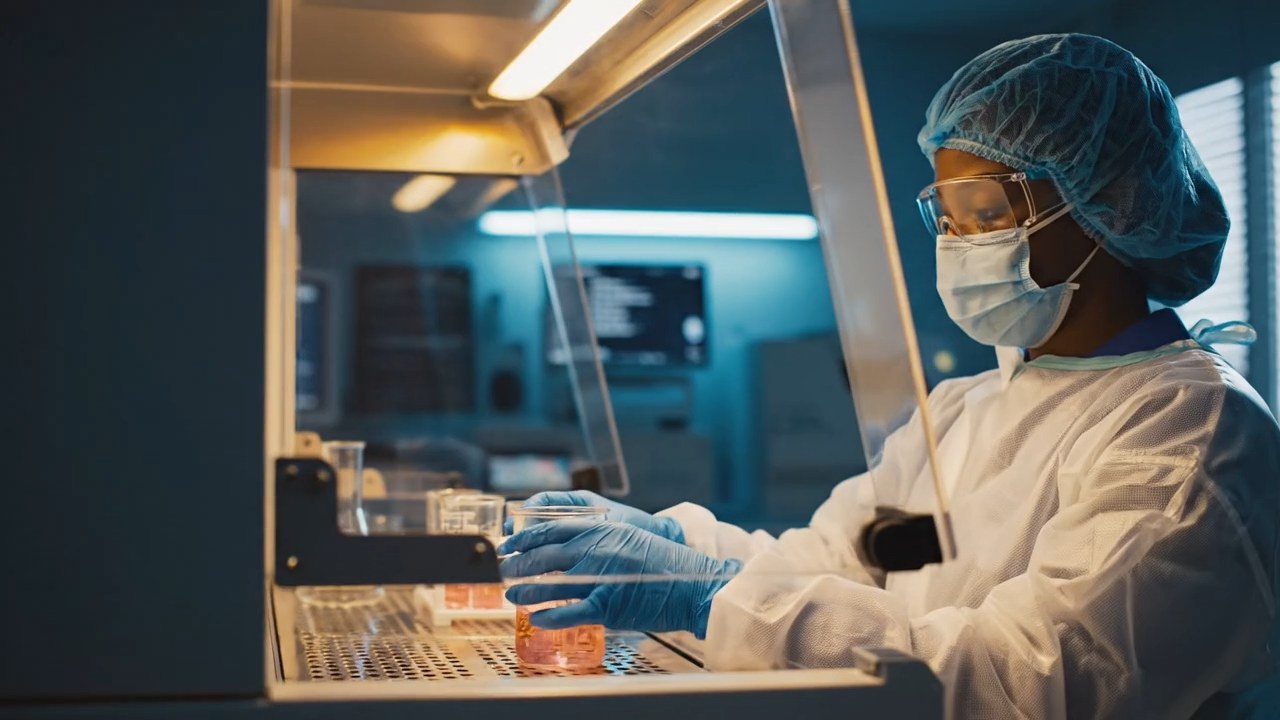
Representative and conceptual imagery. Recommendations depend on individual medical review.